The raga clock
Ragas | Hours | Seasons | Instruments
Watch our musicFree visualizer
In North Indian classical music, many ragas belong to a time of day: some to dawn, some to the hush after midnight. The clock below shows the raga that tradition links to the hour where you are. Tap any hour to look around.
General information, not medical advice. Talk to a doctor about any health concern.
The raga for this hour
Raga Yaman यमन
First part of the night (about 7–10 pm)
Traditionally described as serene, luminous, devotional.
Going upNi Re Ga Ma Dha Ni SaComing downSa Ni Dha Pa Ma Ga Re Sa
Often among the first ragas a student learns, and one of the most performed.
Clock times are approximate. Tradition counts the watches of the day from sunrise and sunset, which move with the season and the place, and different schools place some ragas differently. Where sources differ.
Music from our channel
Sitar, bansuri, santoor, tabla, rudra veena and more from @indianmusiccentral: 167 pieces, from quiet dawn ragas to festival drums and lo-fi. Press play and keep browsing: the player stays with you.
The full library · From our channel, @indianmusiccentral. Nothing loads from YouTube until you press play.
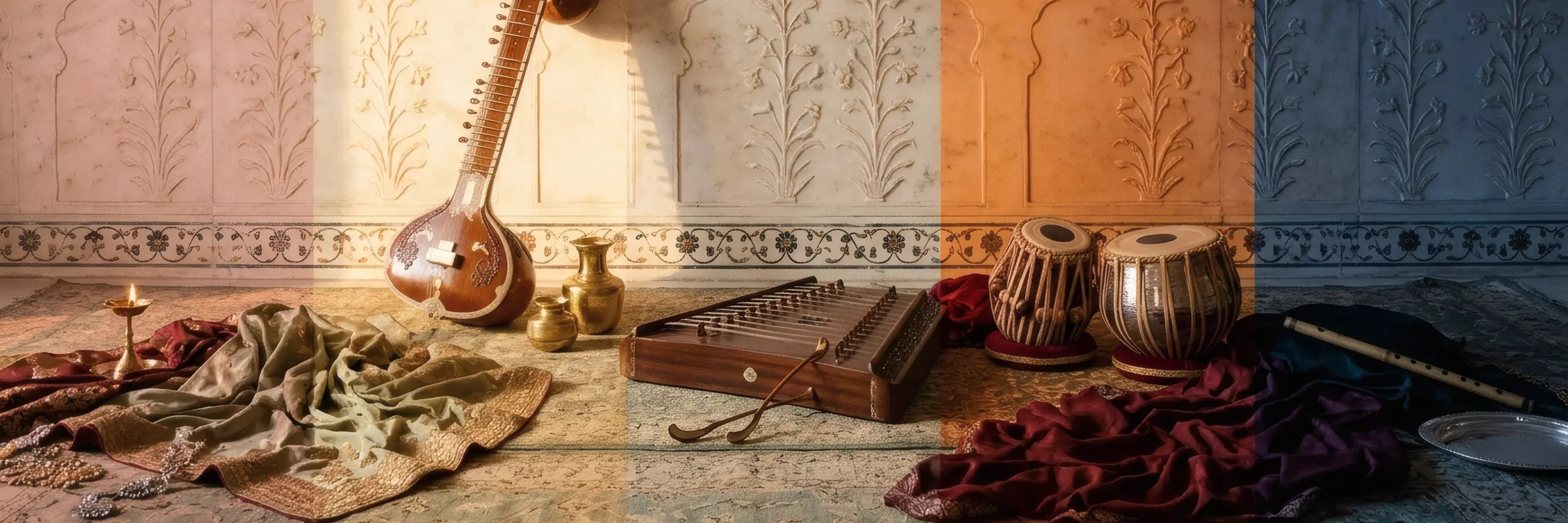
Eight watches, two twilights, and the seasons
Eight watches
The day and night are each split into four prahars, or watches, of about three hours. The numerals on the inner ring of the clock mark them, counted from about 6 am.
Two twilights
Dawn and dusk are junctions, sandhi. Many ragas sung at these hours share komal (flat) Re: Bhairav at dawn, Marwa and Puriya Dhanashree at sunset.
The seasons
A few ragas belong to a season instead of an hour. In the rains, the Malhar ragas are often sung at any hour; in spring, Basant and Bahar.
These time links grew up over centuries (medieval texts already warn against singing a raga at the wrong hour) and were systematized in the early 20th century, most influentially by the musicologist V. N. Bhatkhande. Musicians and schools still disagree about some placings, many concerts and recordings ignore them, and South India's Carnatic tradition treats its own time links as advisory rather than binding. The clock shows one widely taught version. Read more about the hours.
A room for each time of day, and for the rains
Each room gathers the ragas of its hours, with their notes, a live tanpura and a scene for the hour. The monsoon room has soft rain you can add, too.
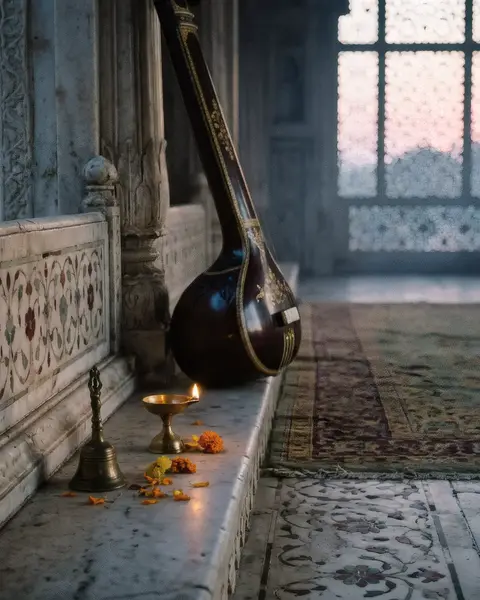
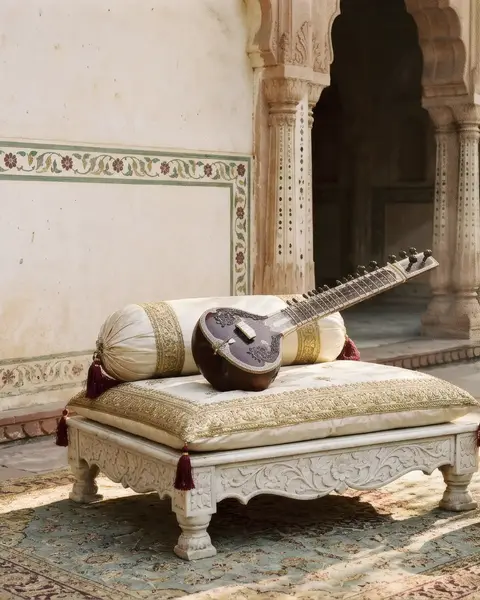
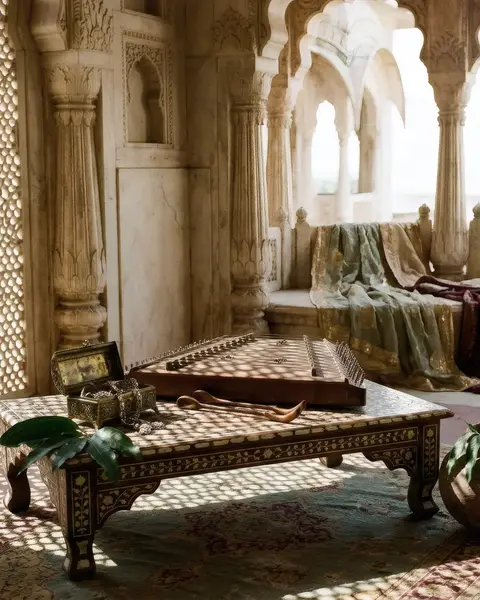
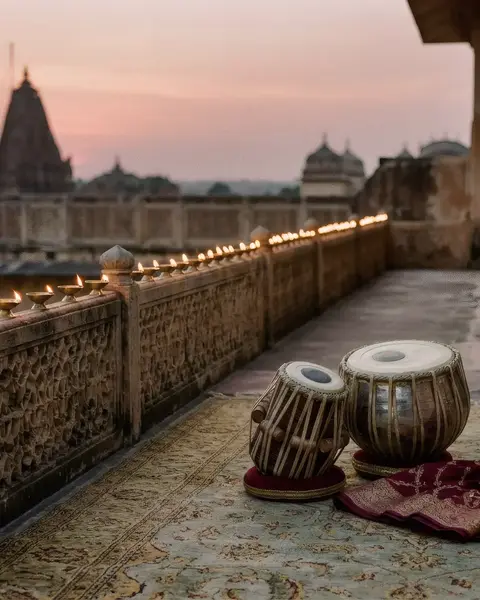
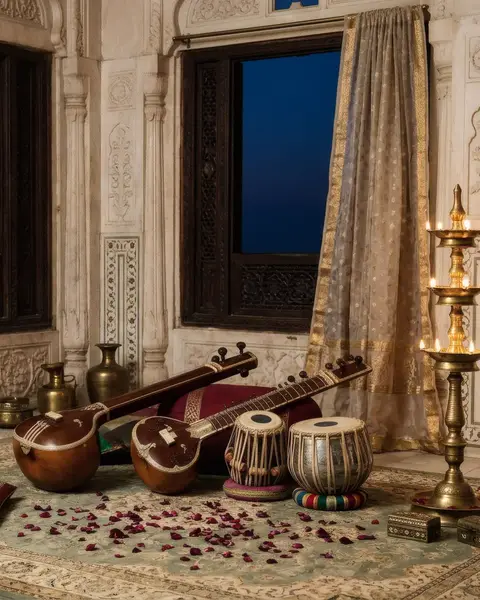
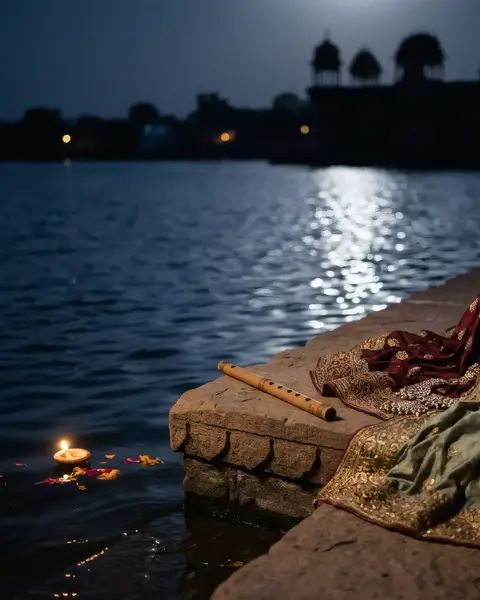

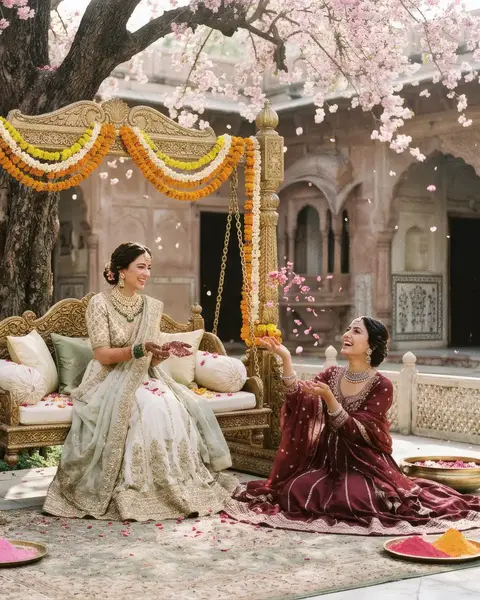
The ragamala paintings
From the 16th to the 19th century, painters at Rajput, Pahari, Deccani and Mughal courts made ragamala, "garlands of ragas": sets of small paintings that picture each raga as a scene, a person, a mood and often a time or season. A monsoon raga might be white cranes against storm clouds; a morning raga, a woman with a veena and listening deer.
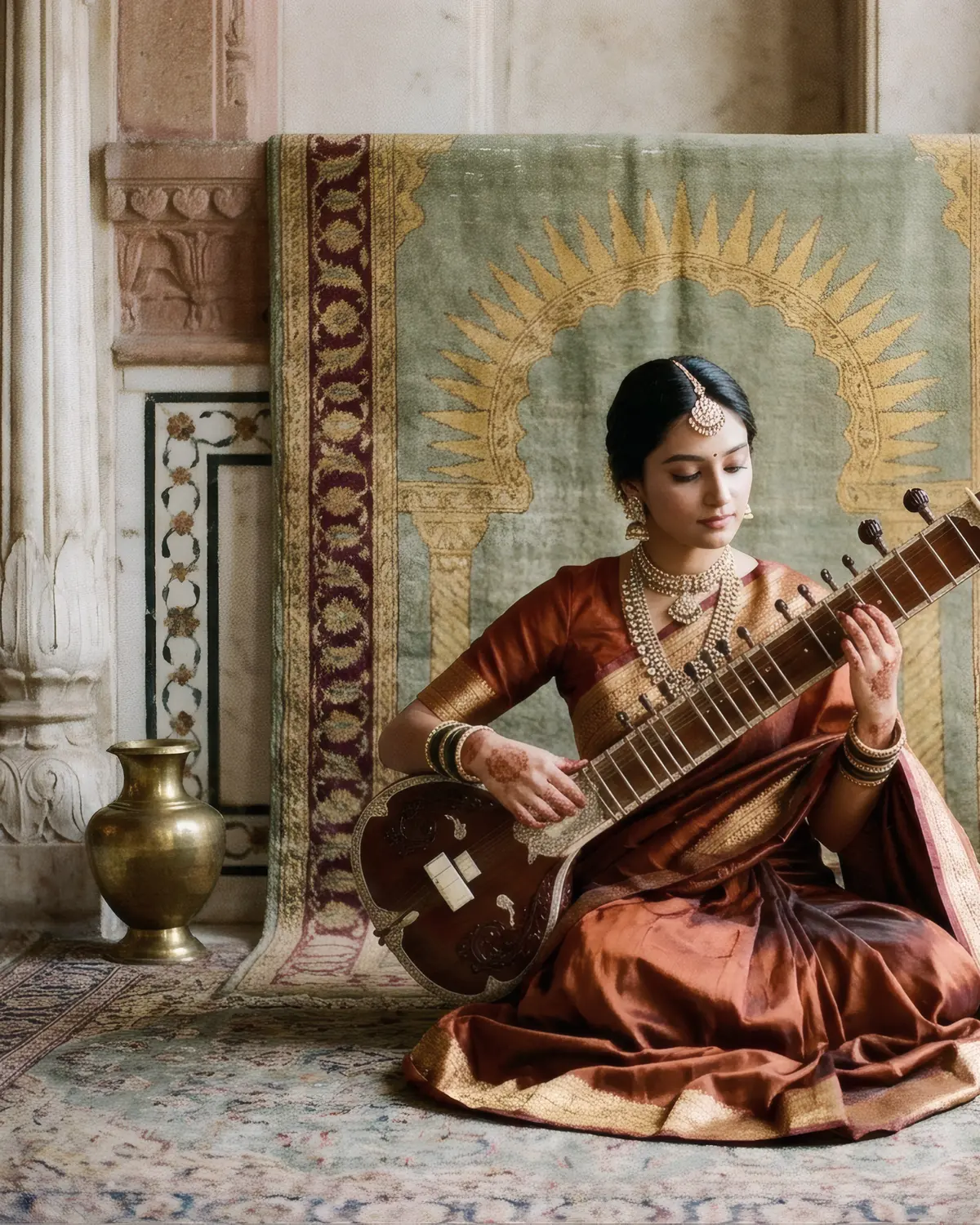
This site borrows their palette and their care: ivory and antique gold, faded sage and deep maroon, fine gold rules and a Mughal trellis on the page.
Good to know
What is a raga?
A raga is a melodic framework in Indian classical music: a set of notes, a way of going up and coming down, characteristic phrases, and the notes to rest on and stress. Musicians improvise within it, so no two performances are the same. It is more than a scale: two ragas can share the same notes and still sound different.
Why are ragas tied to times of day?
In the Hindustani (North Indian) tradition, many ragas have long been associated with a part of the day or night, or with a season. Medieval texts already warn against singing a raga at the wrong hour, and the custom was systematized in the early 20th century. Musicians explain it through mood and through the notes used, for example the flat Re of many twilight ragas, but it is a tradition rather than a law of nature.
Do all musicians follow the time rules?
No. Many respect them in concerts, but recordings, radio, teaching and modern life break them all the time, and schools disagree about where some ragas belong. South India's Carnatic music has its own time associations, but treats them as advisory rather than binding.
Are the tanpura and instruments real?
The tanpura and the instruments use real recordings of single notes, shared freely by musicians on Freesound, re-tuned in your browser to the raga you choose. If the recordings can't load, a simple synthesized sound stands in. Nothing plays until you tap a button, and the sound stops when you leave the page.
Can a raga treat an illness?
In tradition, some ragas are associated with healing particular conditions, and some books and videos repeat this. These are beliefs, not tested treatments: good evidence is lacking, and this site makes no health claims. Enjoy the music for itself, and talk to a doctor about any health concern.
Our earlier guides are still here
Before the raga clock, this site was a general guide to relaxing sound. Those pages stay where they were.