Raga Clock / Instruments / Bansuri
Bamboo fluteThe bansuriबाँसुरी
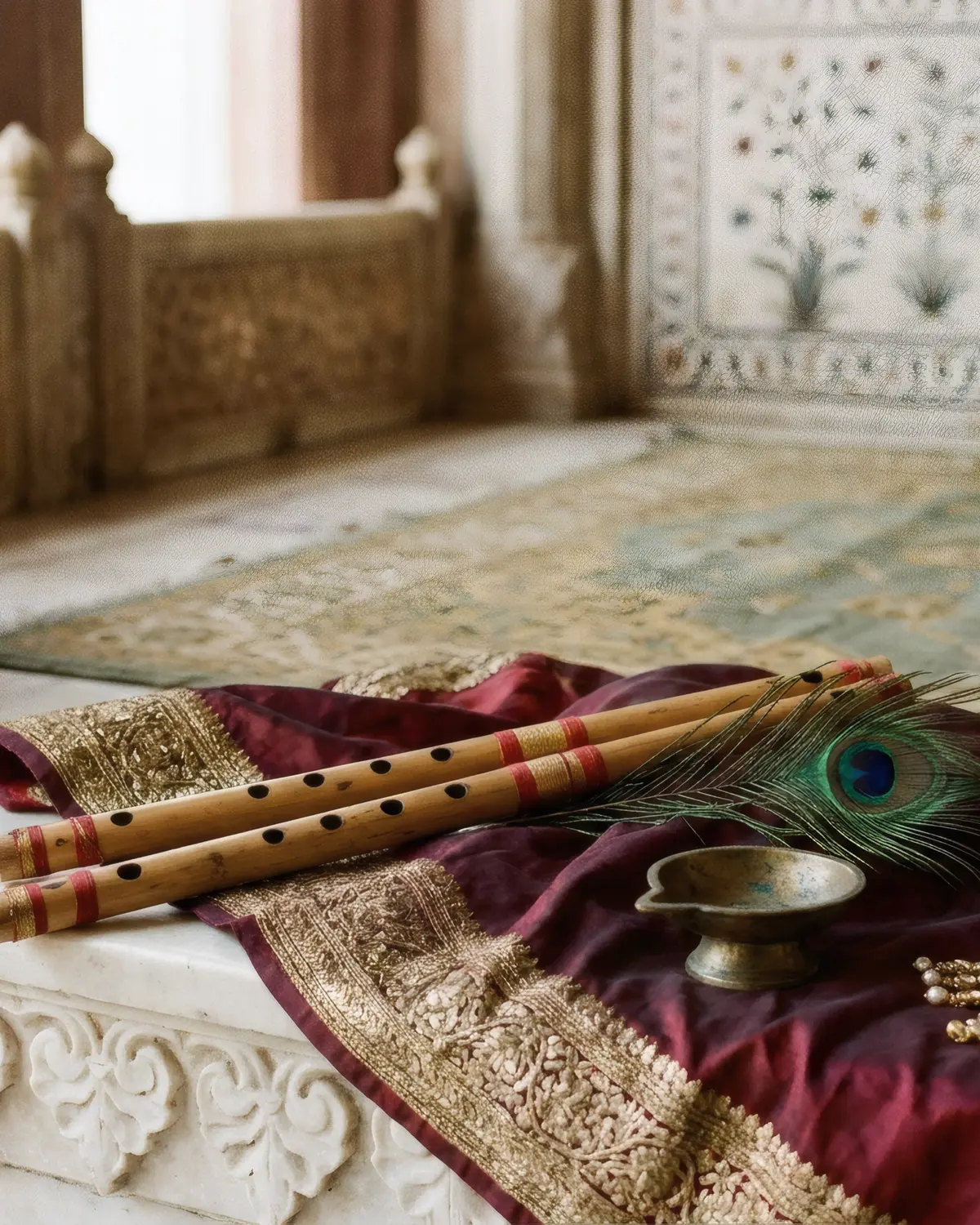
A side-blown flute made from a single length of bamboo, with no keys at all: every note, bend and glide comes from the breath and the fingers.
Play the bansuri yourself
How it works
No keys. Unlike a Western flute, the bansuri has only open finger holes. Covering half a hole lowers a note partway, which is how the player reaches komal (flat) notes and the smooth glides (meend) that ragas need. In the player above, slide between notes without lifting to glide.
Breath is everything. The tone, the soft attack and the vibrato all come from the player's breath, which gives the bansuri a voice-like quality.
Many sizes. Small bansuris are bright and high; the long bass bansuri used in classical concerts is deep and breathy.
From folk flute to concert stage
Bamboo flutes have a long history in India, in folk and devotional music. In the 20th century, Pannalal Ghosh (1911–1960) is credited with bringing the bansuri onto the classical concert stage, using a longer instrument suited to slow, deep raga playing. Hariprasad Chaurasia then made it famous around the world.
The sound is a real bansuri: two long held notes played by one flautist, re-tuned to each note of your raga. Sliding between notes bends the recording, so the glide is real breath, not a synthesizer. If the recordings can't load, a simple synthesized flute stands in. The lowest keys are the same flute shifted further down, so they sound a little darker. The recordings are shared under open licences; see the sound credits.
The real bansuri
More like this in the library · From our channel, @indianmusiccentral. Nothing loads from YouTube until you press play.