Raga Clock / Instruments / Tanpura
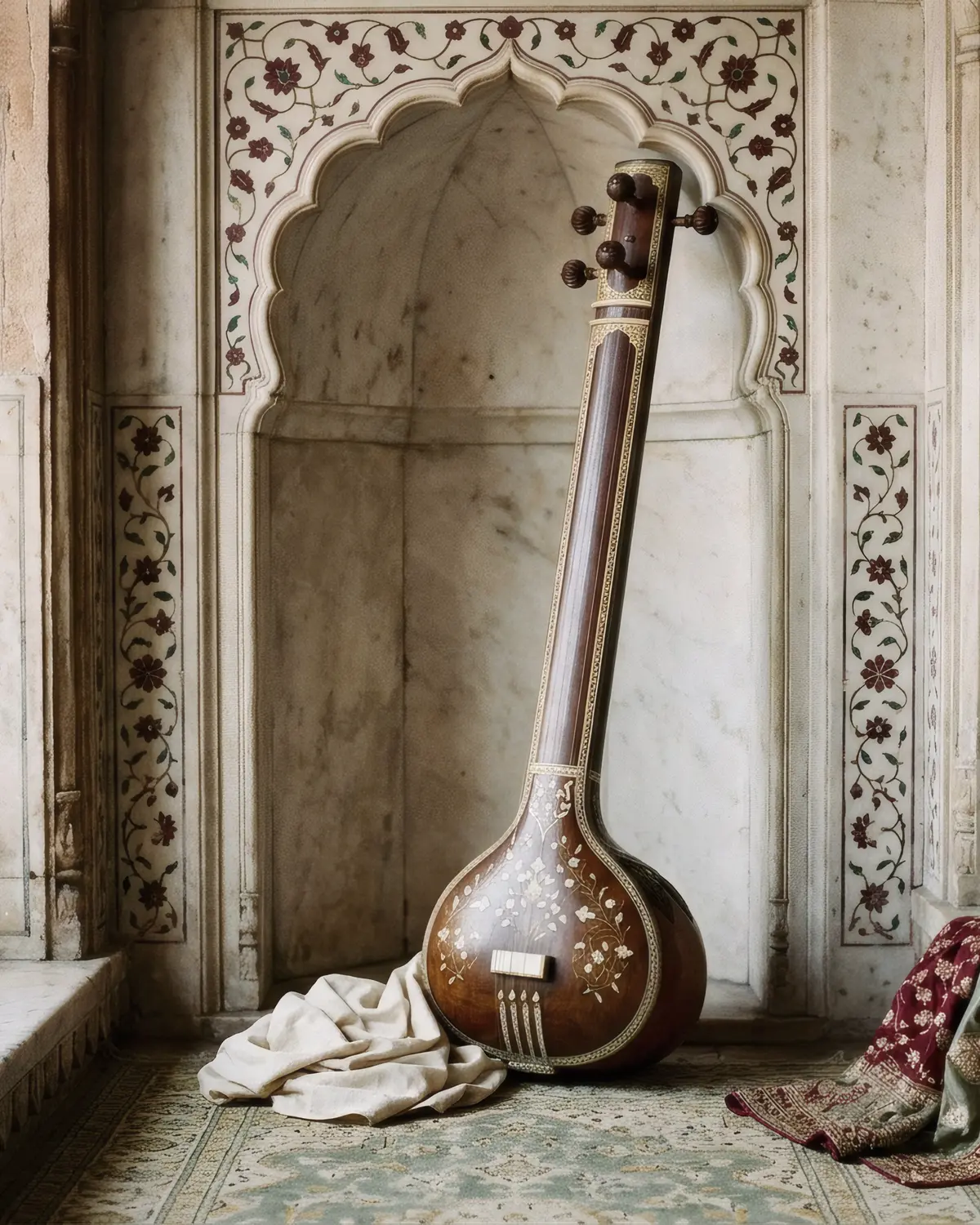
The droneThe tanpuraतानपुरा
It plays no melody at all. Four open strings, plucked one after another in an endless cycle, hold the home note so the raga always knows where it stands.
Start the drone
Choose the pitch of Sa that suits your voice or instrument, then the first string for your raga.
Why a drone?
A raga's character lives in how each note relates to Sa: a flat Re pulls differently against Sa than a natural one does. The tanpura keeps Sa (and usually Pa) sounding all the time, so singer and listener can hear those relationships exactly. Musicians tune their instruments, and singers their voices, to the tanpura.
The first string
The first string is normally Pa. Ragas that leave out Pa, or use it only lightly, are given another note: Ma for Malkauns and Bageshri, Ni for Marwa, Dha for Hindol. On the raga clock and in the rooms, the tanpura retunes itself to suit the raga.
No fixed pitch
Unlike Western orchestras, Indian classical music has no standard reference pitch. Sa is wherever suits the performer, and women usually pitch it higher than men. That is why this tanpura lets you choose.
The jawari
The strings rest on a broad, gently curved bridge, and a cotton thread under each string sets exactly where it touches. As the string vibrates, it grazes the curve, and the sound blooms upward through its overtones. Adjusting the jawari is a craft of its own.
Each pluck is a real tanpura string, recorded tuned to C sharp and re-tuned to the Sa you pick. The browser plucks the four strings in turn, with tiny variations, so the drone is not a looped file. Many musicians today practise with electronic tanpuras; a real one in the room is livelier still. The recordings are shared under open licences; see the sound credits.
Calm listening
More like this in the library · From our channel, @indianmusiccentral. Nothing loads from YouTube until you press play.