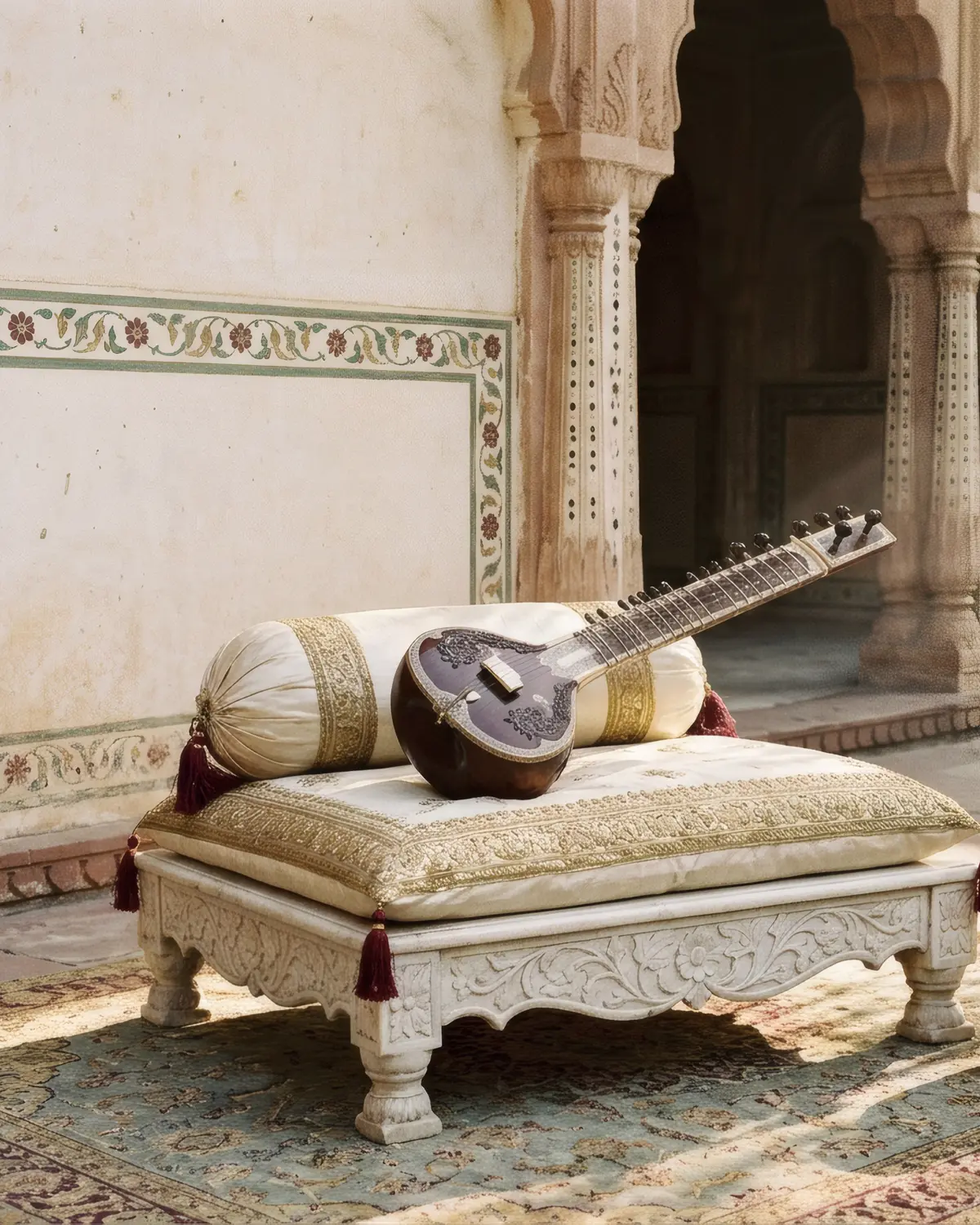
As the sun climbs, the music opens out. Ahir Bhairav keeps Bhairav's flat Re but softens the upper notes. Bilaval is the plain, bright scale that Bhatkhande's system takes as its reference, with the same notes as the Western major scale. By late morning comes Todi, one of the most admired ragas of all, tender and searching.
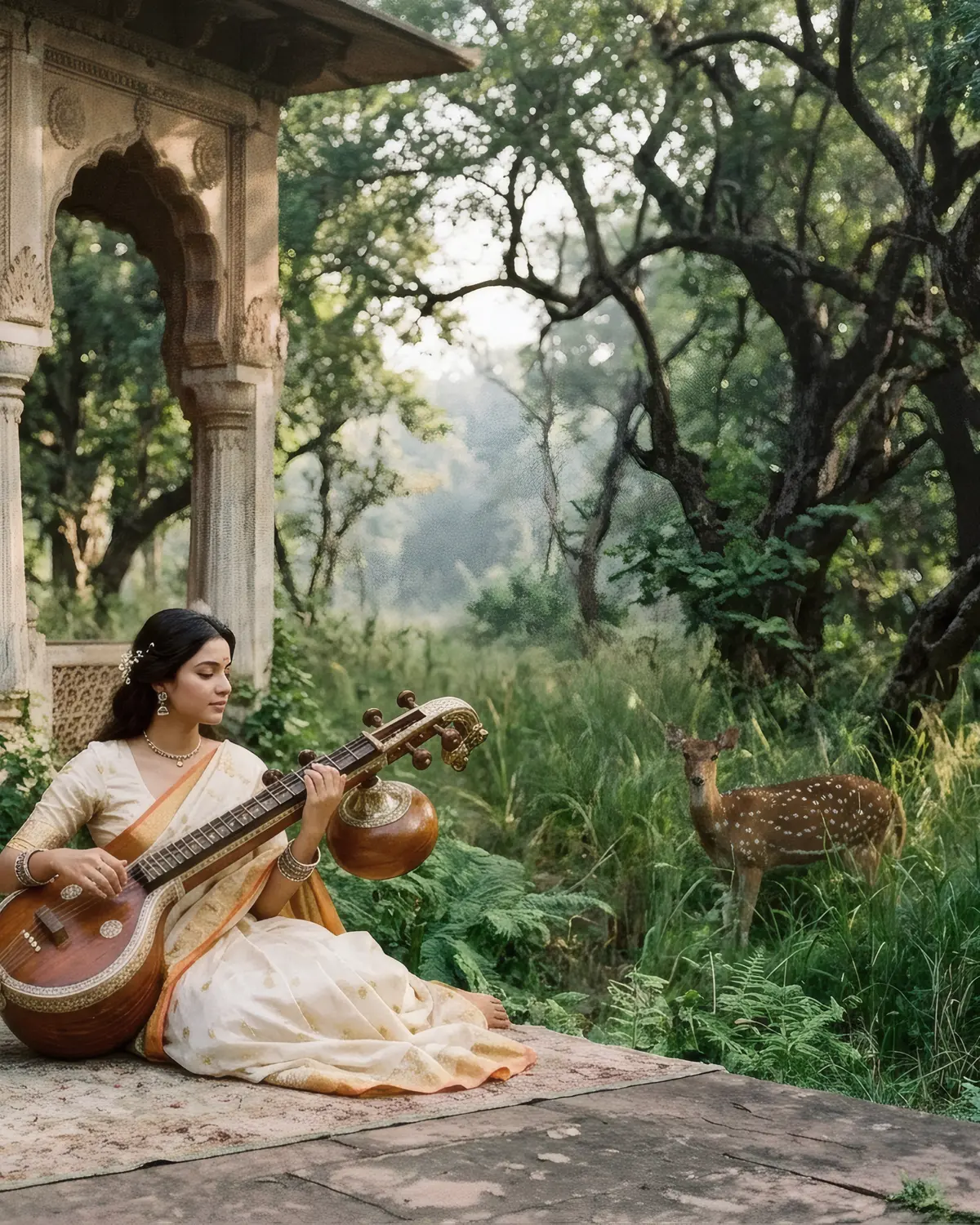
Ragamala painters loved Todi. She is usually shown as a young woman alone in a forest, playing a veena, while deer step out of the trees to listen.
Ahir Bhairav अहीर भैरव
Early morning · about 6–9 am
Parent scale (thaat): Usually filed under Bhairav
Going upSa Re Ga Ma Pa Dha Ni SaComing downSa Ni Dha Pa Ma Ga Re Sa
Bhairav's lower half joined to an upper half like Kafi's, with shuddh Dha and komal Ni. It fits none of the ten parent scales exactly, so books file it under Bhairav for convenience.
Traditionally described as gentle, reflective, warm.
Bilaval बिलावल
Morning · about 8–11 am
Parent scale (thaat): Bilaval
Going upSa Re Ga Ma Pa Dha Ni SaComing downSa Ni Dha Pa Ma Ga Re Sa
The reference scale of the parent-scale (thaat) system, with the same notes as the Western major scale, and a bright morning raga. The version most often heard, Alhaiya Bilaval, adds a touch of komal Ni coming down; the clock uses the plain scale.
Traditionally described as bright, open, cheerful.
Todi तोड़ी
Late morning, the second watch of the day · about 9 am–12 noon
Parent scale (thaat): Todi
Going upSa Re Ga Ma Dha Ni SaComing downSa Ni Dha Pa Ma Ga Re Sa
Miyan ki Todi, the Todi most people mean, is a late-morning raga of tender, plaintive phrases. Pa is usually skipped going up; how it is used coming down varies by lineage, from a light touch to a resting note. Ragamala paintings often show Todi as a woman playing a veena in a forest, with deer drawn to the music.
Traditionally described as tender, plaintive, deep.